
 PES
PESPacific island communities
Pacific Environmental Solutions
Turning waste into power, water and resilience
Circular systems purpose-built for Pacific island communities, scaling from a single village or remote island to towns and cities.
Photo: [hero photo credit]
About PES
A Pacific developer for Pacific infrastructure
Pacific Environmental Solutions is the project owner and developer for community circular systems in the South Pacific. Bright Sand Canada is our technology and engineering partner.
PES is organised as a group, with a national company in each nation it works in. Each national company is jointly owned by PES and local owners.
PESPacific Environmental SolutionsTechnology partner
The challenge
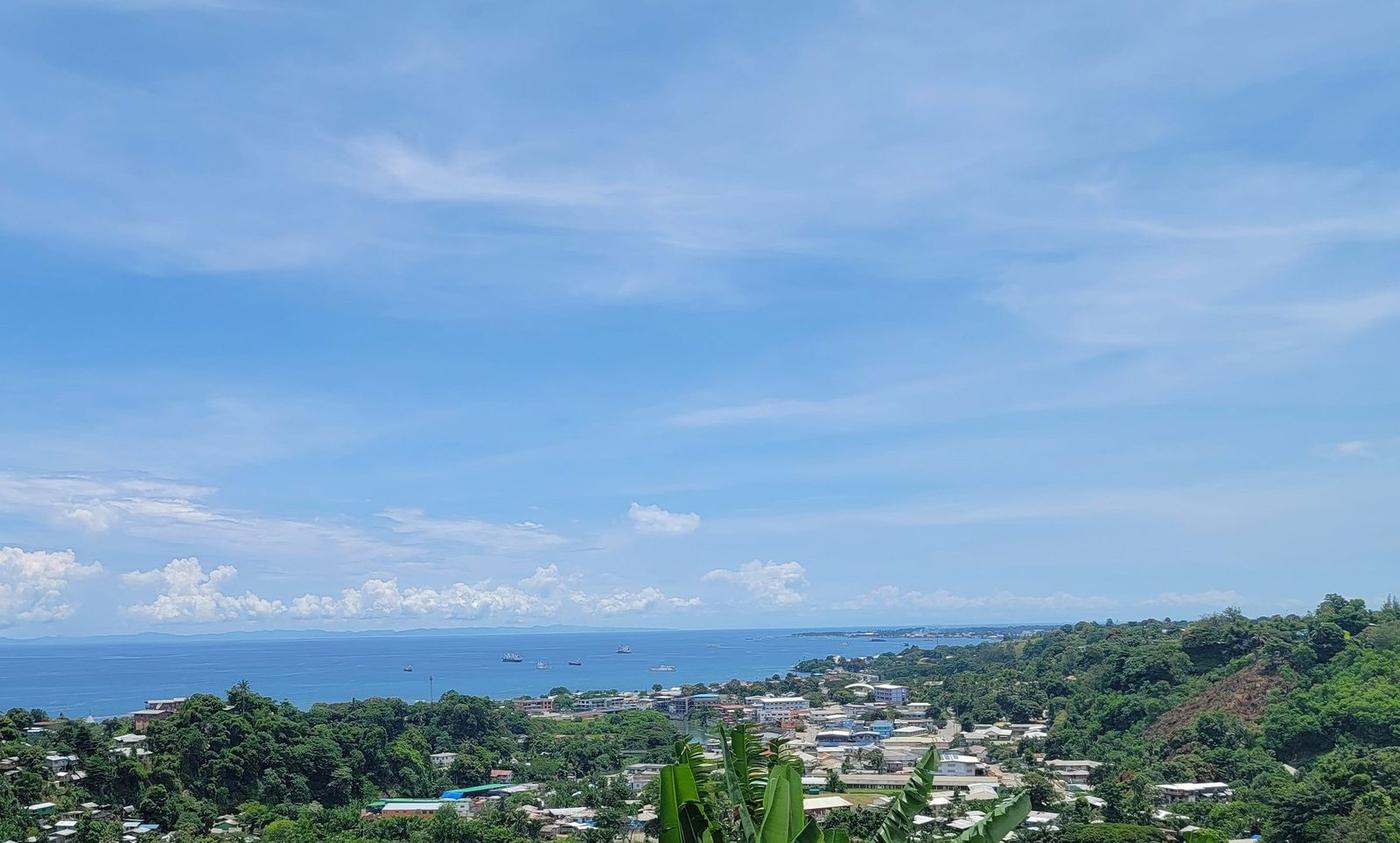
Three linked pressures on every island
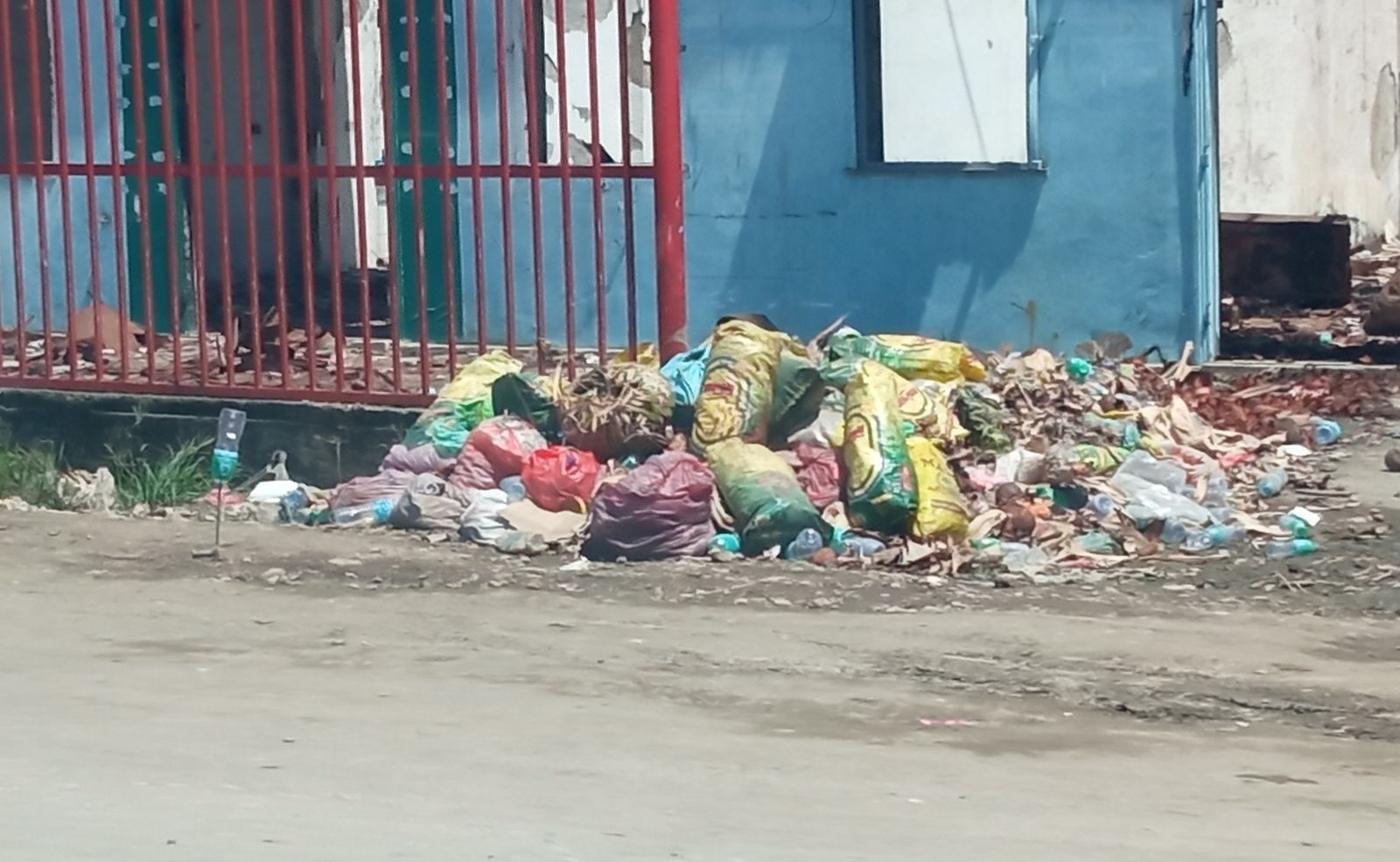
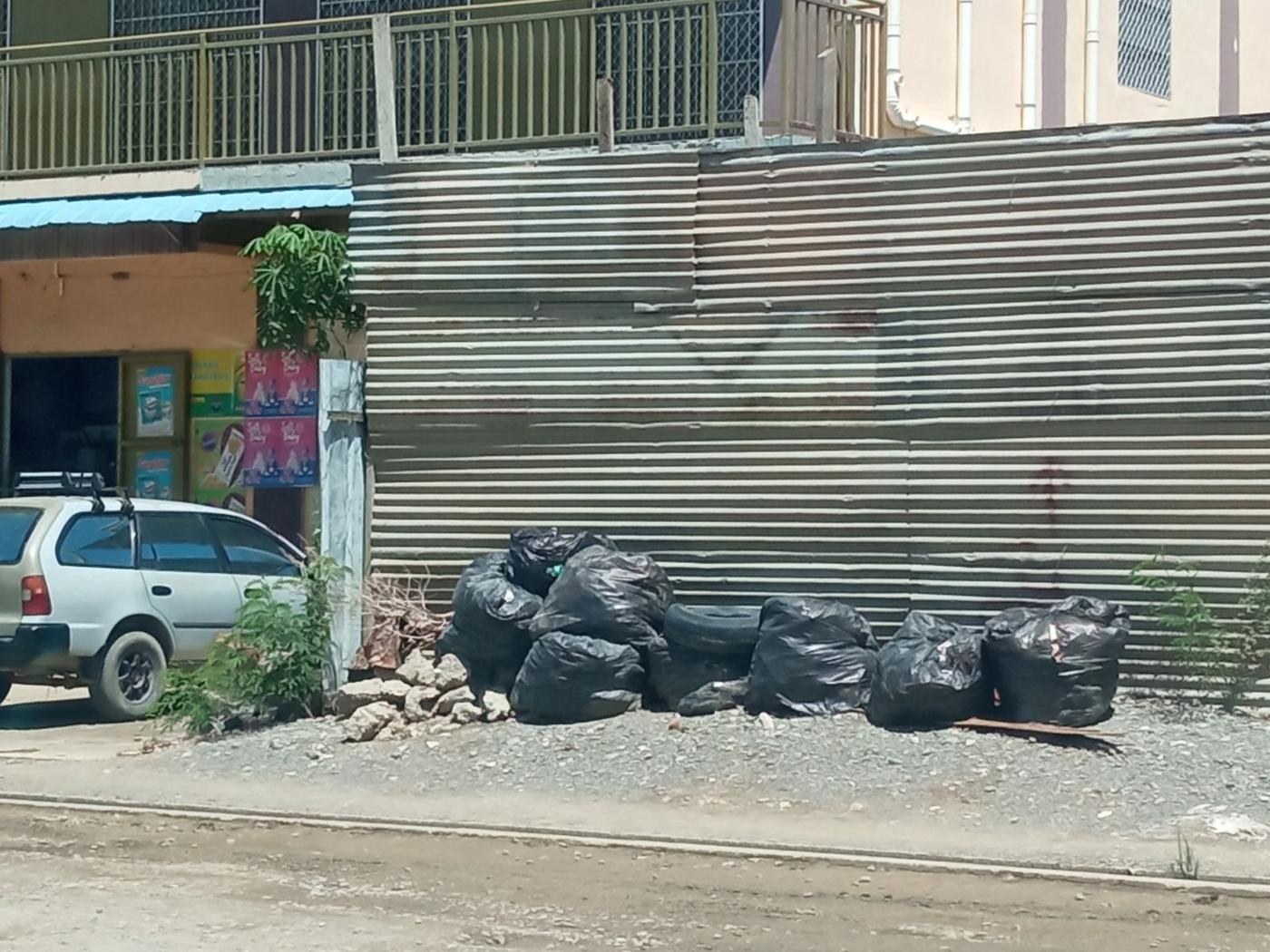
Each one weighs on communities and public budgets, and each can be eased by treating waste as a local resource.
Imported diesel for power
Many island grids depend heavily on imported diesel and other liquid fuels, which leaves power supply and prices exposed to long shipping routes and global fuel markets.1
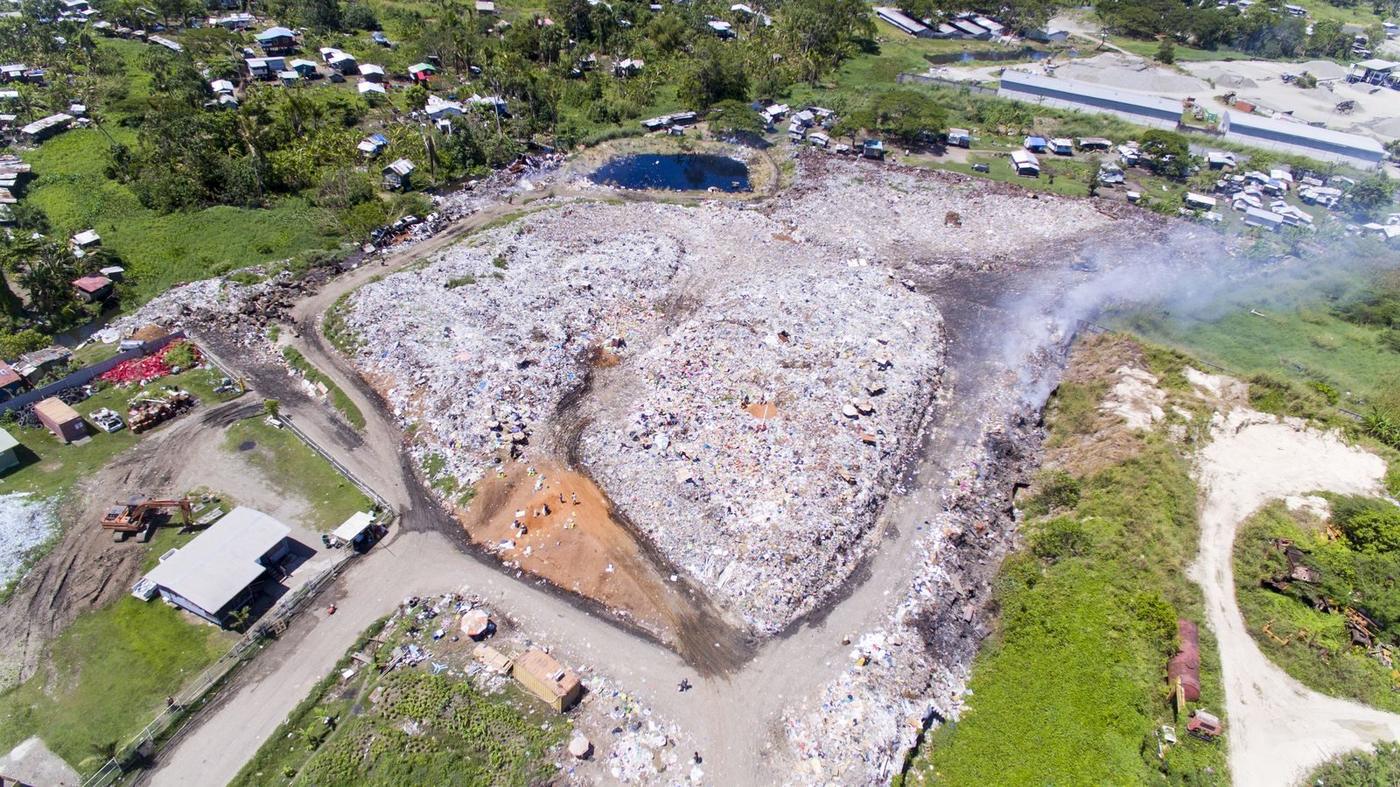
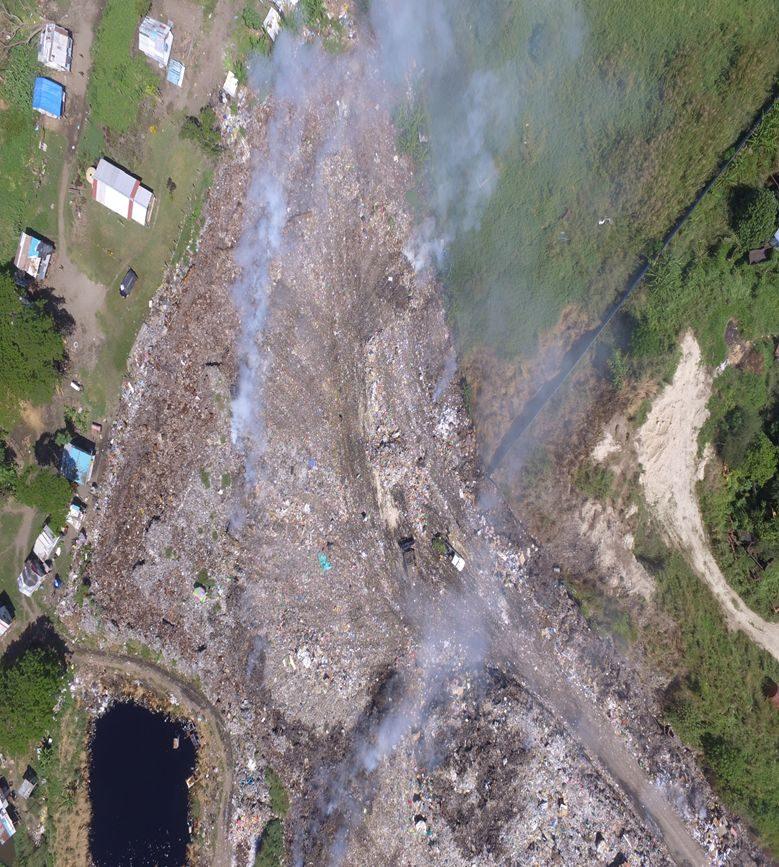
Limited landfill space
Landfills need land, and on many islands suitable land is hard to find: space is limited and much of it is held under customary ownership.2
Freshwater stress
Many communities rely on rainwater and thin groundwater, which drought, saltwater intrusion and contamination can quickly put under pressure.3
- International Finance Corporation (World Bank Group), Powering the Pacific: A Guide to Investing in Renewable Electricity Generation in the Pacific (2021). ↩
- Asian Development Bank, Solid Waste Management in the Pacific: Appropriate Technologies (2014). ↩
- SOPAC for the United Nations Environment Programme, Harvesting the Heavens: Guidelines for Rainwater Harvesting in Pacific Island Countries (2004). ↩
The circular system
Waste stays on the island and comes back as power and water
Every PES hub runs the same loop. Waste is collected, sorted and converted on-island, and what comes out goes straight back to the community.
- Collect from landfills, households, businesses and the shoreline.
- Convert it with a rotary kiln and tyre pyrolysis.
- Return electricity, fresh water and carbon products to the island.
- Repeat, with clean power and BESS units charging the electric fleet that brings in the next load.
Built to scale
One design that scales with the community
Every PES system is built from the same modules. A village starts with one; a remote island, a town or a city adds more as needs grow, without changing the design, the training or the spare parts.
- 1
Village
A single community
- Village collection points and scheduled pickup
- Solar with a BESS unit for charging and emergency backup
- Waste taken to the nearest PES hub
- 2
Remote island
Off-grid or a small grid
- A compact hub that runs on the island itself
- Solar, storage and desalination sized to the island
- AI-assisted operation for a small local team
- 3
Town
A provincial or outer-island centre
- Full hub: rotary kiln, tyre pyrolysis and gas cleaning
- Landfill takeover and an electric collection fleet
- Power to the town grid and fresh water
- 4
City
A capital or main urban centre
- More processing lines on the same design
- Fuel-cell tri-generation and grid support
- City-wide collection and landfill recovery
Begin with a single village or island and grow from there.
Capacity grows in steps that match the waste and power the community actually has.
Villages feed island hubs, and island hubs link to town and city systems.
Our approach
Three principles behind every PES system
Purpose-built, built to scale
Each system is designed around the community's own waste, energy and water needs, from a village to a city. It is phased and sized for real local tonnage, so it can be run and maintained locally.
Waste becomes resilience
One hub takes in community waste and produces power and heat. It can drive desalination alongside solar and storage, easing pressure on landfill, diesel imports and freshwater at the same time.
Proven partners, accountable structure
PES holds exclusive South Pacific rights and works with Bright Sand Canada, whose patented carbon technology was developed in Windsor, Ontario. Financing is framed for ADB, GCF and bilateral donors.
Our model
One group, a national company in each nation
Local ownership keeps each system rooted in the community it serves, while the group brings the technology partnership and project development to every nation.
The system
From collection to clean power and fresh water
PES takes over landfill and municipal waste operations, starts recovering what is already buried, and runs collection with an electric fleet. Every stream is processed through Bright Sand waste-to-energy systems, sized for each community.
Step 1
Collect
PES-operated
- Landfill takeover and recovery of buried waste
- Municipal waste collection
- Plastics and tyre pickup
- Electric collection trucks
Step 2
Receive and load
Front end
- Weighing and tipping floor
- Metals and glass sorted out for recycling
- Shredding and automated feed
Step 3
Convert
Thermal processing
- AI-operated rotary kiln
- Tyre pyrolysis line
Step 4
Clean and recover
Downstream
- Gas cleaning and conditioning
- Carbon and oil recovery
Step 5
Generate
Tri-generation
- Solid oxide fuel cells make power and heat
- Waste heat drives desalination
Step 6
Deliver
To the community
- Electricity to the island grid
- Fresh water
- Carbon products using Bright Sand Canada's patented carbon technology
- Less waste in landfill
Solar and battery storage in the same package
Solar runs alongside the waste-to-energy hub. Battery energy storage system (BESS) units do double duty.
BESS units charge the electric collection trucks day to day.
When a cyclone or outage hits, the same units keep essential services running.
Storage smooths solar output and supports the island grid.
Proven technology
Bright Sand technology in practice
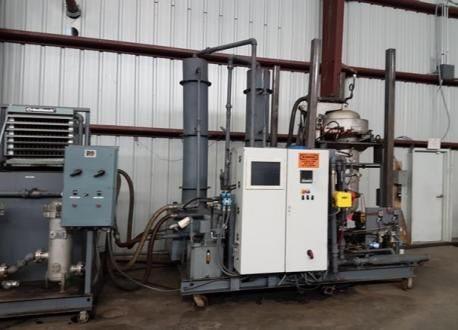
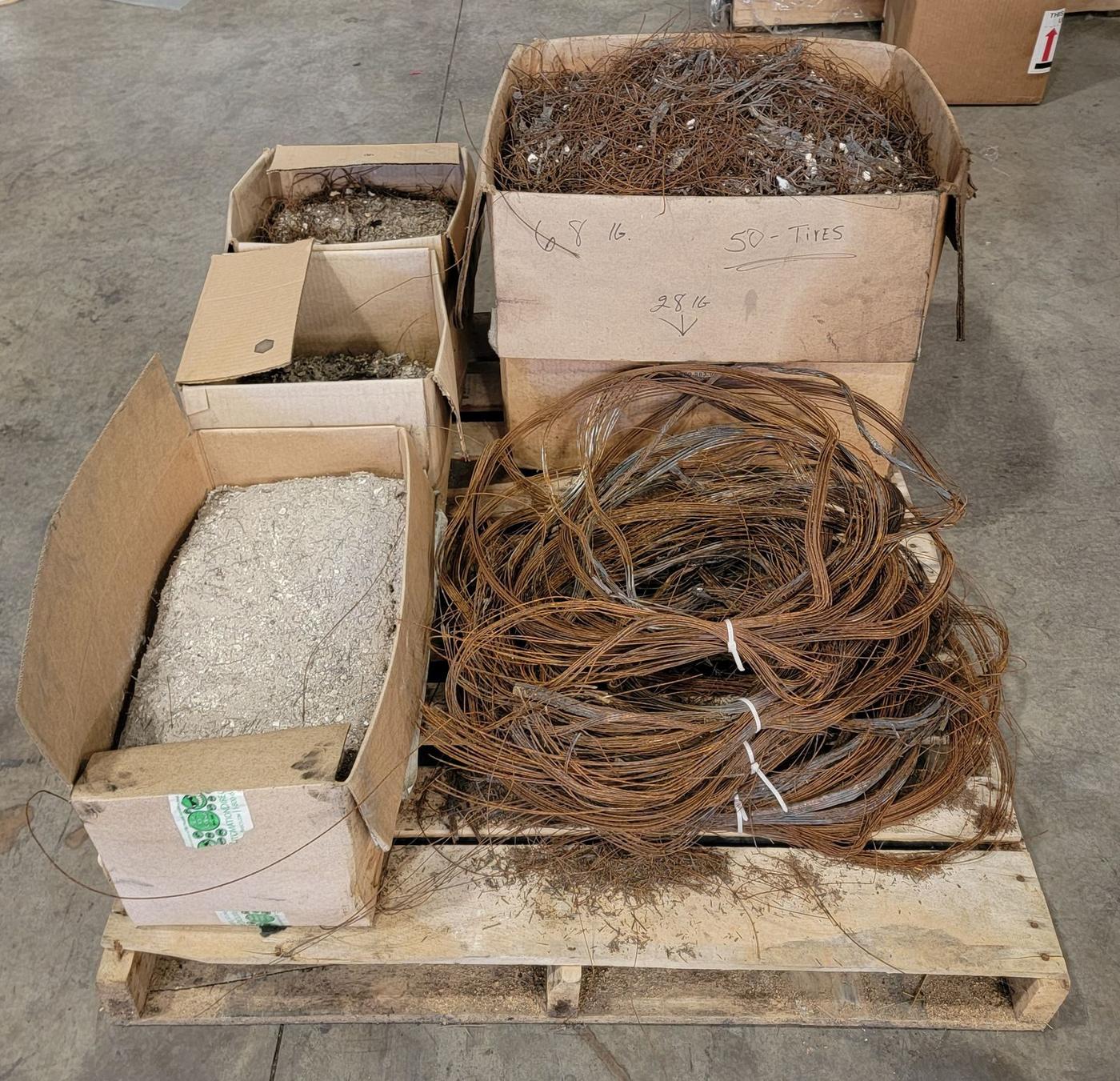
These photos show Bright Sand technology and its continuous improvement at a facility owned and operated by Carbon Black Global, which licenses some Bright Sand technology. PES does not own or operate this facility.
PESPacific Environmental SolutionsTechnology partner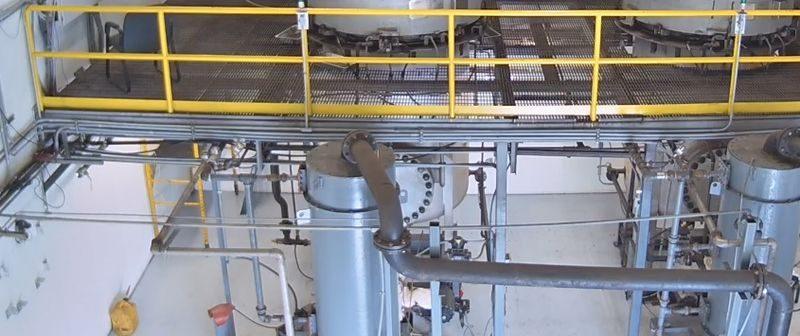
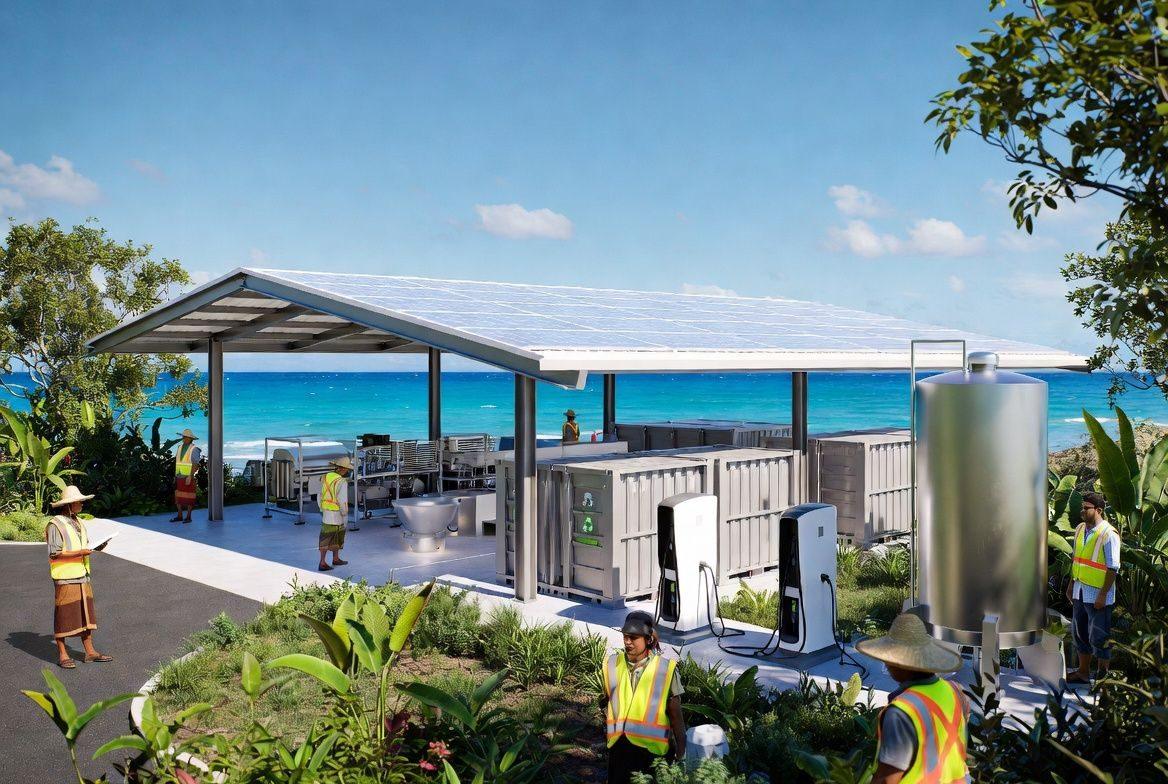
How a community hub could look
Illustrative concept: not a real site. An artist's impression of a community resource-recovery hub, with a solar canopy, battery storage and a water tank. The image is computer-generated and the people shown are not real.
Where we work
Serving the South Pacific
PES focuses on seven nations: Tonga, Solomon Islands, Samoa, Kiribati, Nauru, Tuvalu and Vanuatu. Each has its own locally owned national company. Every island nation in the region can work with PES.
Melanesia
Who we work with
One system, built for every partner on the island
- National governmentsEnergy security, climate commitments and a phased national plan.
- Development financeBankable green infrastructure for multilateral and climate funds.
- EnvironmentLandfill recovery, plastics and tyres out of the ocean, cleaner air and water.
- Towns and citiesCollection, landfill operation and backup power as one municipal service.
- Villages and remote islandsDesigned with each community: collection, power and water close to home.
Partners and leadership
Accountable people, proven technology
PES leads each project in the region. Bright Sand Canada, which developed and tests the platform at its Windsor facility, is our technology partner.
Managing Director
Leads Pacific Environmental Solutions, which holds exclusive South Pacific rights. [Sean bio, about 40 words]
VP Marketing
Leads PES marketing and community communications. [Michelle bio, about 40 words]

Chief Technical Officer (CTO)
Founder of Bright Sand Group in Windsor, Ontario, and inventor of its patented carbon technology.
Technology partner
An applied research and development company in Windsor, Ontario, where the PES platform was developed and is tested. Visit Bright Sand Canada
PESPacific Environmental Solutionswith technology partner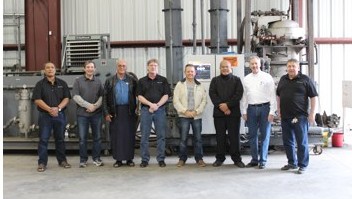
Seeing the technology first-hand
In 2017 a delegation from Tonga visited a plant in Dunlap, Tennessee, to see an earlier system designed and built by Earl Decker in operation.
Contact PES
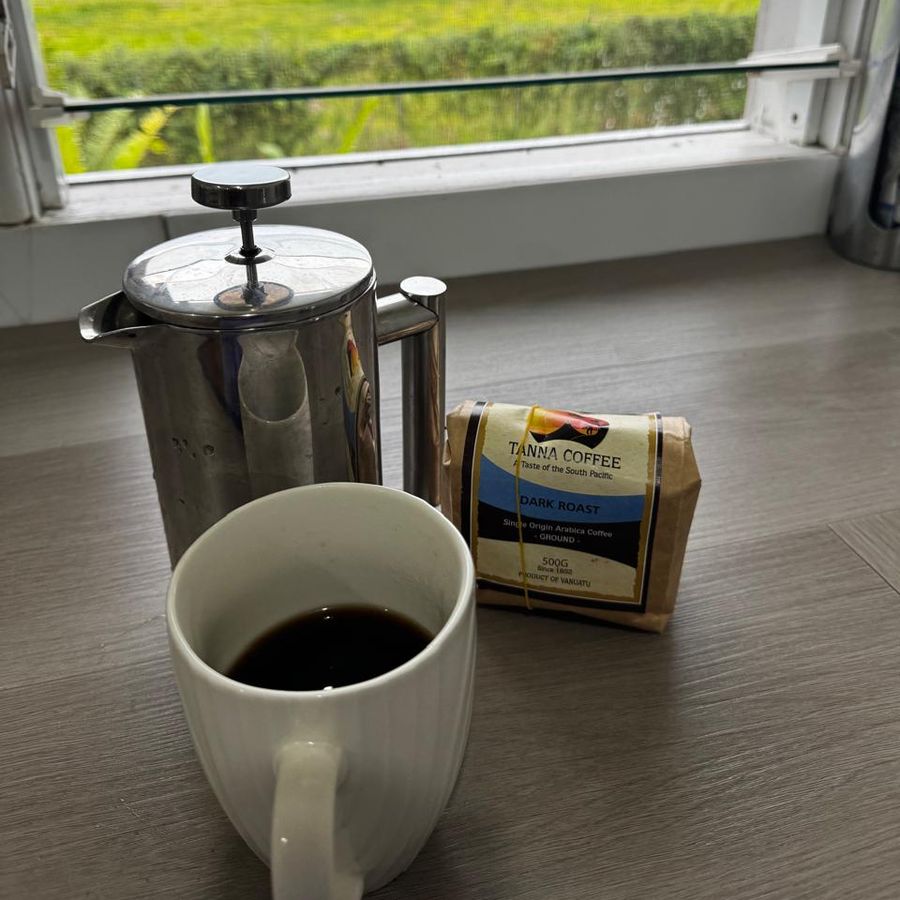
Let’s talk over coffee
For government, development finance, technical and media enquiries. We reply to every message. Tell us about your island, town or village, and we’ll set up a conversation.
 PESPacific Environmental Solutions
- Registered office
- [registered office address]
- [Facebook page link]